Dr. K. PRASHANTH KUMAROrthopedic & Joint Surgeon
Discipline 04 of 06Sports Medicine & Arthroscopy

Sports Injury Management

Rapid Assessment, Ligament Reconstruction & Safe Return-to-Play Pathways

Comprehensive sports orthopedic care encompassing rapid diagnosis, minimally invasive ligament reconstruction, and functional athletic rehabilitation. Catering to competitive athletes, fitness enthusiasts, and weekend warriors, Dr. Prashanth Kumar focuses on anatomical biomechanical restoration, preventing secondary joint degradation, and guided milestone-based return to sporting competition.

Sports Injury Management
Attending Specialist

Dr. K. Prashanth Kumar

MBBS, D.Ortho, DNB Ortho

Hospital Centers

Nirmal & Khanapur

Specialty Area

Sports Medicine & Arthroscopic Surgery

Primary Approach

Ligament Reconstruction & Functional Rehab

Anesthesia / Setting

Spinal / Regional Nerve Block

Typical Stay

Day Care to 24 Hours

Recovery Window

3 to 6 Months for cutting/pivoting sports

Clinical Indications

When to Seek Evaluation for Sports Injury Management

Orthopedic consultation is recommended if you or your loved ones experience any of the following clinical signs:

ACL (Anterior Cruciate Ligament) and PCL tears following a sudden twist, pop, or landing injury
Meniscus tears (bucket handle, radial, or complex) causing joint instability or locking
Recurrent shoulder dislocations, Bankart lesions, and labral tears
Rotator cuff tears and subacromial impingement in overhead athletes (cricket, badminton)
Recurrent ankle sprains, ATFL ligament tears, and chronic ankle instability
Overuse tendinopathies: Tennis Elbow, Golfer's Elbow, Patellar Tendinitis (Jumper's Knee), Achilles Tendinitis
Surgical & Clinical Scope

Procedures & Treatment Modalities

Advanced surgical and non-surgical procedures conducted using high-precision techniques and evidence-backed protocols:

1Arthroscopic ACL Reconstruction

Anatomical replacement of the torn anterior cruciate ligament using the patient's own autograft (hamstring or bone-patellar tendon-bone).

Key Clinical Highlights:
  • Keyhole surgery with precision anatomical tunnel drilling
  • High-strength bio-composite or titanium suspensory button fixation
  • Restores rotational stability and prevents early osteoarthritis

2Meniscal Repair & Preservation

Suturing and saving native torn meniscal tissue using advanced all-inside and inside-out instrumentation.

Key Clinical Highlights:
  • Preserves natural shock-absorption and joint cushioning
  • Critical for the long-term cartilage health of young active athletes
  • Combined with biologic marrow venting to accelerate healing

3Arthroscopic Bankart & Labral Repair

Re-anchoring torn shoulder labrum and capsule to the glenoid bone rim for recurrent shoulder instability.

Key Clinical Highlights:
  • Uses bio-absorbable, knotless suture anchors
  • Restores overhead throwing strength and shoulder confidence
  • Prevents repeated dislocations and glenoid bone loss

4Targeted Injections & Biologic Therapy

Ultrasound-guided biologic and anti-inflammatory injections for chronic recalcitrant tendon and ligament conditions.

Key Clinical Highlights:
  • Alleviates stubborn tennis elbow, plantar fasciitis, and patellar tendinitis
  • Promotes local tissue recovery in non-responsive sports injuries
  • Coupled with eccentric strengthening rehabilitation protocols
Rehabilitation Roadmap

Step-by-Step Recovery & Mobility Pathway

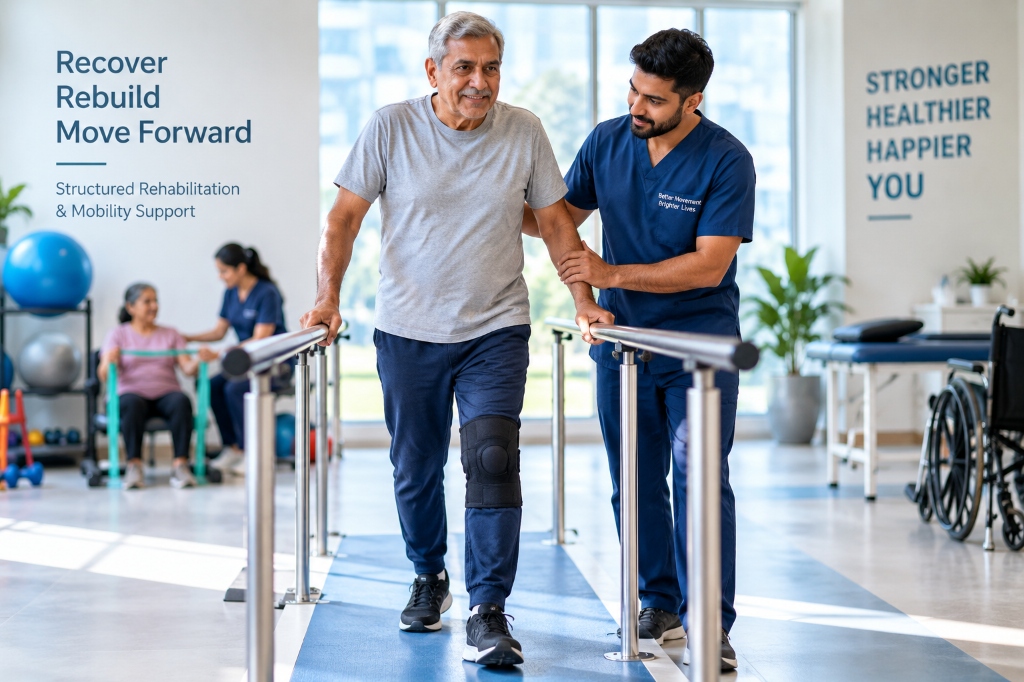
A structured, milestone-based timeline to guide you from initial treatment back to active, independent living:

1

Phase 1: Protection & Early Activation

Weeks 1 to 2

Controlling effusion, protecting graft fixation, and achieving full knee extension.

Expected Milestones & Care Actions:
  • Hinged brace protection and crutch-assisted gait
  • Passive extension to 0 degrees and patellar mobilizations
  • Quadriceps activation drills (quad sets, straight leg raises)
2

Phase 2: Functional Ambulation

Weeks 3 to 6

Weaning off crutches and restoring normal walking gait mechanics.

Expected Milestones & Care Actions:
  • Progressive full weight-bearing without crutches
  • Stationary cycling with zero resistance for knee flexion
  • Closed kinetic chain exercises (mini-squats, calf raises)
3

Phase 3: Athletic Reconditioning

Months 2 to 4

Building symmetrical lower limb strength and neuromuscular proprioception.

Expected Milestones & Care Actions:
  • Leg press, hamstring curls, and resistance band work
  • Swimming (flutter kick) and outdoor straight-line jogging
  • Single-leg balance and wobble board proprioception drills
4

Phase 4: Return to Sport Clearance

Months 6 to 9

Sport-specific agility drills and formal functional clearance testing.

Expected Milestones & Care Actions:
  • Multi-directional cutting, deceleration, and plyometric jump landing
  • Limb Symmetry Index (LSI) testing >90% strength vs uninjured leg
  • Full clearance for competitive match play and contact sports
Clinical Rigor

Diagnostic Workup & Safety Protocol

Accurate planning is essential for predictable outcomes. Every case undergoes standardized diagnostic verification:

High-definition 3.0T MRI joint imaging specifically calibrated for ligament and labral delineation
Clinical ligament laxity testing: Lachman test, Pivot-Shift test, Anterior Drawer, Apprehension test
Functional movement screen (FMS) and dynamic balance assessments
Comparative stress digital radiographs for ankle and knee collateral integrity
Patient Guidance

Frequently Asked Questions

Clear answers to common questions about Sports Injury Management procedures and aftercare:

Surgical reconstruction is strongly advised for young, active individuals, athletes, and anyone who experiences knee instability or 'giving-way' during daily or recreational activities. Leaving an unstable knee untreated carries a high risk of subsequent meniscal tears and premature osteoarthritis.

Have more questions about Sports Injury Management?

Browse all 200 patient Google search questions answered for Dr. K. Prashanth Kumar in Nirmal & Khanapur.

View 200 Patient FAQs
Comprehensive Portfolio

Other Orthopedic Disciplines

Browse All 6 Disciplines
Discipline 03Minimally Invasive & Spine

Arthroscopy & Spine Care

Advanced keyhole joint visualization and operative procedures combined with structured clinical management for spinal disorders. Minimally invasive arthroscopy allows Dr. Prashanth Kumar to diagnose and treat internal cartilage and meniscus tears through sub-centimeter portals, while our comprehensive spine protocols prioritize non-operative core stabilization, ergonomic restructuring, and targeted decompression for back and neck conditions.

Discipline 02Trauma & Reconstructive Surgery

Fracture Treatment & Trauma Care

Prompt, definitive diagnosis and surgical or non-surgical stabilization for acute bone fractures, high-energy polytrauma, complex articular injuries, and delayed unions. Dr. Prashanth Kumar delivers evidence-based trauma stabilization focused on anatomic alignment, stable internal fixation, and preserving periosteal blood supply for reliable bone union.

Discipline 05Non-Surgical & Preservation

Conservative Management & Joint Preservation

Proactive, holistic orthopedic care dedicated to preserving natural joints and avoiding unnecessary surgery whenever clinically appropriate. Dr. Prashanth Kumar prioritizes evidence-based medical therapies, intra-articular treatments, supervised physical therapy, lifestyle ergonomics, and functional joint unloading to relieve pain and maximize mobility.