Dr. K. PRASHANTH KUMAROrthopedic & Joint Surgeon
Discipline 02 of 06Trauma & Reconstructive Surgery

Fracture Treatment & Trauma Care

Anatomical Reduction, Advanced Fixation & Comprehensive Bone Healing

Prompt, definitive diagnosis and surgical or non-surgical stabilization for acute bone fractures, high-energy polytrauma, complex articular injuries, and delayed unions. Dr. Prashanth Kumar delivers evidence-based trauma stabilization focused on anatomic alignment, stable internal fixation, and preserving periosteal blood supply for reliable bone union.

Fracture Treatment & Trauma Care
Attending Specialist

Dr. K. Prashanth Kumar

MBBS, D.Ortho, DNB Ortho

Hospital Centers

Nirmal & Khanapur

Specialty Area

Orthopedic Trauma & Fracture Surgery

Primary Approach

Anatomical Reduction (ORIF, MIPPO, Casting)

Anesthesia / Setting

Regional Nerve Block / General Anesthesia

Typical Stay

Day Care to 3 Days (injury dependent)

Recovery Window

6 to 12 Weeks for radiological bone union

Clinical Indications

When to Seek Evaluation for Fracture Treatment & Trauma Care

Orthopedic consultation is recommended if you or your loved ones experience any of the following clinical signs:

Acute closed or open (compound) bone fractures from road accidents, falls, or workplace trauma
Intra-articular fractures involving knee (tibial plateau), ankle (pilon/malleolar), wrist (distal radius), or elbow
Osteoporotic fragility fractures in seniors (femoral neck, trochanteric, vertebral compression)
Unstable, displaced, or rotated fractures that cannot heal safely in a cast
Delayed union, malunion, or non-union with persistent pain or functional impairment
Periprosthetic fractures occurring around previously placed joint replacements or implants
Surgical & Clinical Scope

Procedures & Treatment Modalities

Advanced surgical and non-surgical procedures conducted using high-precision techniques and evidence-backed protocols:

1Open Reduction & Internal Fixation (ORIF)

Surgical exposure of the fracture site to achieve exact anatomical alignment, secured with low-profile titanium locking compression plates (LCP) and screws.

Key Clinical Highlights:
  • Restores articular congruency for joint surfaces
  • Rigid fixation enabling immediate movement of adjacent joints
  • Low-profile anatomical plates minimizing soft-tissue irritation

2Closed Interlocking Intramedullary Nailing (IMN)

Minimally invasive biological fixation for long bone fractures (femur, tibia, humerus) inserted through small entry points.

Key Clinical Highlights:
  • Preserves vital fracture hematoma and periosteal blood supply
  • High load-sharing strength permitting earlier protected weight-bearing
  • Minimal surgical scarring and rapid wound healing

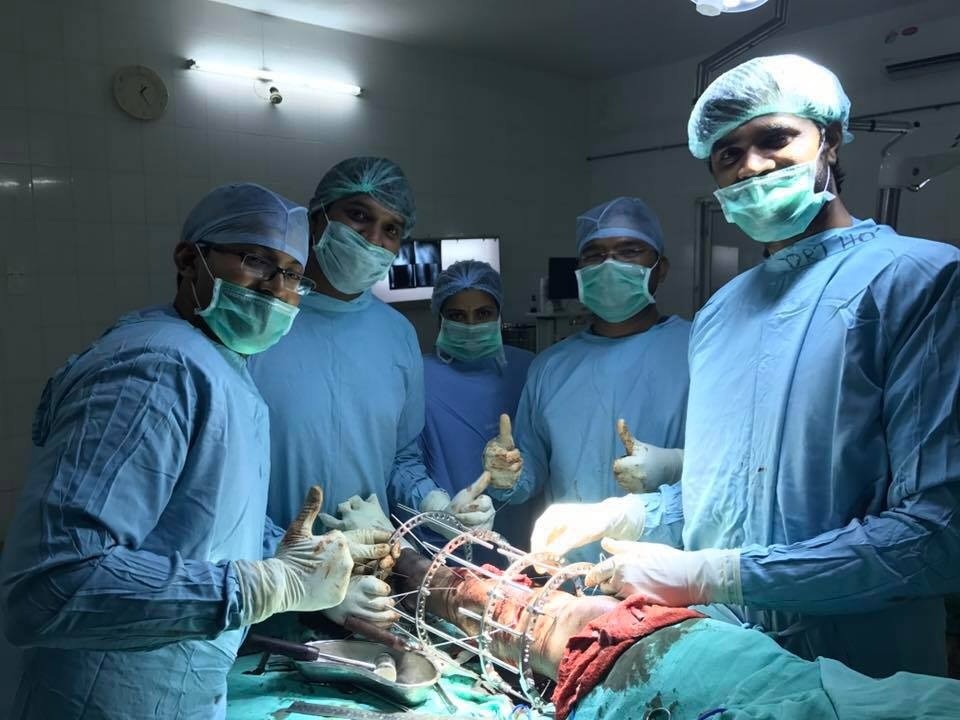
3External Fixation & Ilizarov Ring Fixators

Staged damage-control stabilization and complex deformity correction for open fractures with severe soft-tissue compromise or bone loss.

Key Clinical Highlights:
  • Emergency stabilization without introducing foreign implants into contaminated wounds
  • Enables easy wound dressing, plastic surgery flaps, and vascular repair
  • Facilitates bone transport and limb-lengthening where needed

4Conservative Casting & Functional Bracing

Non-operative closed reduction and immobilization for stable, non-displaced fractures in children and adults.

Key Clinical Highlights:
  • Custom-molded lightweight fiberglass casts and splints
  • Regular radiological monitoring of bone alignment during healing
  • Structured early joint mobilization once clinical union commences
Rehabilitation Roadmap

Step-by-Step Recovery & Mobility Pathway

A structured, milestone-based timeline to guide you from initial treatment back to active, independent living:

1

Phase 1: Acute Stabilization

Weeks 1 to 2

Soft tissue swelling reduction, pain management, and non-weight-bearing protection.

Expected Milestones & Care Actions:
  • Limb elevation, icing, and strict adherence to weight-bearing restrictions
  • Wiggle exercises of distal digits (fingers/toes) to maintain venous return
  • Wound inspection and dressing change at postoperative clinic visit
2

Phase 2: Early Callus Formation

Weeks 3 to 6

Early bone bridging visible on X-rays; gentle guided range-of-motion drills.

Expected Milestones & Care Actions:
  • Active assisted mobilization of adjacent joints (knee, hip, ankle, or elbow)
  • Gradual transition to partial weight-bearing with walker or crutches if permitted
  • Gentle isometric muscle toning exercises
3

Phase 3: Progressive Union

Weeks 6 to 10

Radiological evidence of solid bone bridging; progression toward full weight-bearing.

Expected Milestones & Care Actions:
  • Advancing to full weight-bearing walking as confirmed by follow-up X-rays
  • Discontinuing external splints or walking aids under doctor's guidance
  • Progressive resistance exercises for muscle reconditioning
4

Phase 4: Full Consolidation & Remodeling

Months 3 to 6

Complete bone remodeling, heavy functional capacity, and return to work/sports.

Expected Milestones & Care Actions:
  • Return to heavy vocational tasks, physical labor, or sporting pursuits
  • Final radiographic confirmation of cortical bone consolidation
  • Long-term counseling on bone health and fall prevention
Clinical Rigor

Diagnostic Workup & Safety Protocol

Accurate planning is essential for predictable outcomes. Every case undergoes standardized diagnostic verification:

High-resolution digital radiographs in multiple orthogonal views
3D CT scan reconstructions for complex intra-articular and pelvic trauma
Neurovascular assessments and Doppler ultrasound when vascular compromise is suspected
Emergency blood profiling, cross-matching, and soft-tissue injury grading
Patient Guidance

Frequently Asked Questions

Clear answers to common questions about Fracture Treatment & Trauma Care procedures and aftercare:

No. A significant number of stable, non-displaced fractures heal cleanly with conservative treatment, such as custom fiberglass casts or functional braces. Surgery is reserved for displaced fractures, joint surface involvement, unstable breaks, or compound injuries requiring rigid stabilization.

Have more questions about Fracture Treatment & Trauma Care?

Browse all 200 patient Google search questions answered for Dr. K. Prashanth Kumar in Nirmal & Khanapur.

View 200 Patient FAQs
Comprehensive Portfolio

Other Orthopedic Disciplines

Browse All 6 Disciplines
Discipline 06Pediatric Orthopedics & Trauma

Paediatric Trauma Care

Specialized orthopedic trauma care tailored specifically for infants, children, and adolescents. Because growing bones possess open growth plates (physes) and distinct remodeling biological potential, Dr. Prashanth Kumar delivers compassionate, gentle care that safeguards lifelong bone development, prevents angular deformities, and minimizes emotional distress for young patients and their parents.

Discipline 01Adult Reconstruction

Joint Replacement Surgery

Advanced surgical replacement of severely degenerated, arthritic, or traumatized joint surfaces with biocompatible medical prostheses (titanium, cobalt-chrome, highly cross-linked polyethylene, and ceramics). Led by Dr. K. Prashanth Kumar with specialized focus on tissue-sparing approaches, optimal kinematic alignment, and early postoperative weight-bearing.

Discipline 04Sports Medicine & Arthroscopy

Sports Injury Management

Comprehensive sports orthopedic care encompassing rapid diagnosis, minimally invasive ligament reconstruction, and functional athletic rehabilitation. Catering to competitive athletes, fitness enthusiasts, and weekend warriors, Dr. Prashanth Kumar focuses on anatomical biomechanical restoration, preventing secondary joint degradation, and guided milestone-based return to sporting competition.